
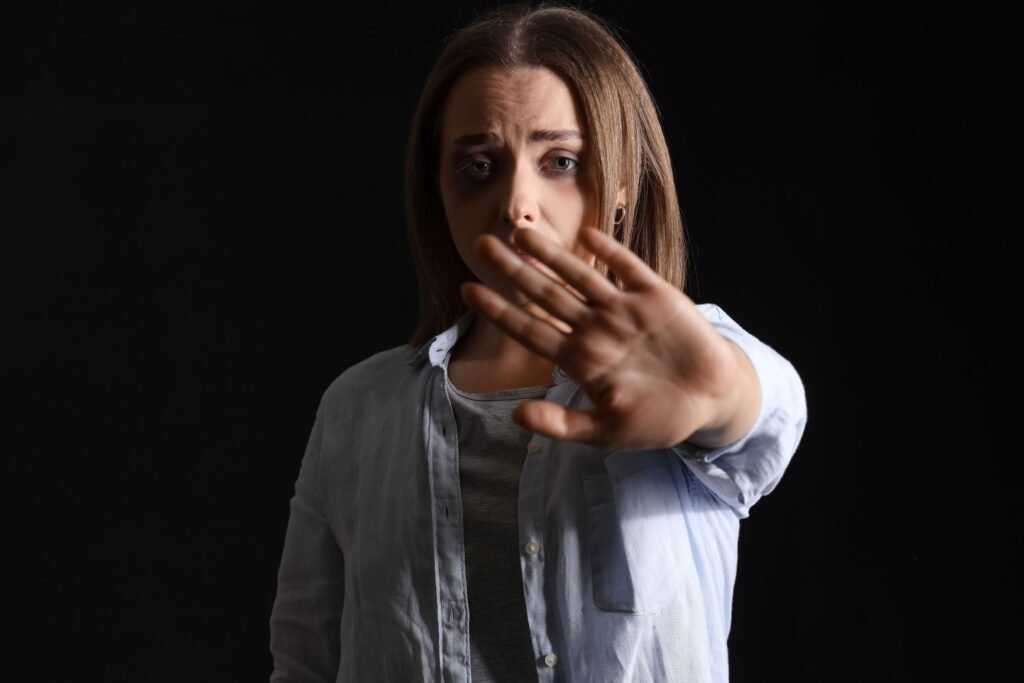
A few minutes after a video is posted, the comment section often tells you what the algorithm cannot. People plead for it to be taken down. Others ask for the clip to be saved “before it’s deleted.” Someone, inevitably, calls it staged. A friend messages privately: Is this real? Should I report it?
That small interval, the time between upload and amplification, is where much of social media’s safety work now happens. Not in public statements about “community standards,” but in machine decisions made at speed, under pressure, and usually without fanfare. Violence detection, a branch of content moderation that tries to spot harmful imagery, threats, and coercion, has become an essential, quiet layer of protection. It is also becoming more complicated, because the evidence people use to tell stories online is easier than ever to manufacture.
The new evidence problem
For years, platforms trained users to treat screenshots as proof. A cropped chat bubble can “confirm” a breakup, a confession, an admission of guilt, a plan. It can also fuel harassment within minutes. The aesthetics of messages are familiar, which makes them persuasive. And now, the tools to fabricate them are not restricted to savvy designers.
Type in a few lines of text, choose an avatar, pick a timestamp, and export: that’s all it takes on many generators. One popular site, used for everything from skits to classroom examples, lets users produce a convincing whatsapp chat screenshot in the same casual way they might make a meme. The legitimate uses are real. Film and TV productions mock up conversations for props. UX teams create wireframes. Teachers demonstrate online safety scenarios without involving real students. But the same convenience also lowers the barrier for intimidation: a fake exchange that implies a threat, a fake confession, a fake “proof” that someone wanted harm.

fakechatgenerators.com lets you mock up chat screenshots across 16 platforms
When violence enters the picture, the consequences are not limited to reputational damage. A fabricated chat can be used to justify retaliation, whip up a mob, or “prove” that a person is dangerous. In some cases, it can be used to silence victims by suggesting they invited abuse. Platforms are forced to make fast calls about content that looks like evidence but may be theater.
What violence detection is actually trying to do
“Violence detection” sounds like one problem, but on major social platforms it is several. There is the obvious category: graphic content, gore, scenes of assault. There is also implied violence, like weapons displayed in a threatening context, or a livestream where tension builds and viewers sense something is about to happen. Then there is coercion, a gray zone where a clip may not show harm but suggests it, or incites it.
Detection systems have to make decisions about:
- Visual cues: blood, weapons, physical struggle, sudden motion, bodies in distress.
- Audio cues: screaming, gunshots, impact sounds, panicked speech.
- Text overlays and captions: threats, slurs, instructions, “watch till the end.”
- Context signals: prior reports on the account, location patterns, the speed of re-uploads.
None of this is simple. A boxing match may look like an assault. A horror movie clip is staged but can still be traumatizing. War documentation may be newsworthy, even necessary, and still harmful to distribute without warning. A video of police violence may be critical public evidence. These are not edge cases. They are routine.
In practice, platforms often combine automated detection with human review, and use a tiered response. Some content gets removed. Some gets age-gated. Some stays up but is not promoted. Some triggers a “friction” layer: warning screens, blurred thumbnails, click-through confirmations.
The public sees the outcome, not the deliberation. That is why it can look arbitrary. Behind the scenes, teams are trying to prevent the worst outcomes: copycat behavior, targeted harassment, and real-world harm triggered by online escalation.
Speed matters, and so does restraint
If you have ever tried reporting a violent post, you know the gap between feeling urgency and receiving a response. The reason platforms invest in machine detection is not because they want to replace humans, but because volume makes triage unavoidable.
Live video intensifies that. A livestream can turn into a crisis in seconds, and the platform is responsible for decisions that used to belong to editors with time to confirm facts. When violence is imminent, “wait for verification” can be its own kind of failure.
At the same time, restraint matters. Over-removal can erase documentation of abuse and human rights violations, and can disproportionately silence communities already subject to scrutiny. That’s why detection systems often aim for a middle step first: flagging, limiting distribution, routing to a high-priority review queue. The best systems do not pretend they are judges. They try to be early warning systems.
The arms race: synthetic media and the credibility gap
The harder problem now is not only violent content, but believable falsehoods about violence.
AI-generated images and manipulated videos can fabricate injuries, stage crimes, or place real people in scenes they were never part of. Even when the content is quickly debunked, the initial exposure can be enough to trigger threats, doxxing, or vigilantism. Meanwhile, real footage can be dismissed as “fake” simply because fakes are common. This is the credibility gap: the public’s growing uncertainty about what they are seeing.
Moderation teams talk about this in plain terms. When everyone doubts everything, both propaganda and harassment get easier. For violence-related content, that can be fatal. A fake “proof” of an attack can spark retaliation. A fake threat can be used to justify preemptive violence. And genuine warnings may not be believed until it is too late.
A toolchain, not a silver bullet
Because the problem spans images, video, and documents, the safety toolkit has become a patchwork of specialized detectors. Some systems focus on violent imagery. Others focus on deepfakes. Others try to identify tampering in identity documents, which matters when platforms verify accounts, or when marketplaces and banks handle user onboarding and disputes.
One product in that ecosystem, pitched toward trust and safety work, is an ai image detector that says it can detect AI-generated media, NSFW content, violence, and document tampering. It claims 98.7 percent detection accuracy across more than 50 generative models, including Midjourney, DALL-E, Stable Diffusion, Flux, Ideogram, Google Gemini, and GANs, with sub-150ms latency. Those numbers, if borne out in real deployments, are not about replacing judgment. They are about giving teams a fast, consistent signal that something deserves scrutiny.

sightova.com flags AI-generated, tampered, NSFW, and violent imagery in milliseconds
Latency matters more than most users realize. If a platform can get a result in under 150 milliseconds, it can run checks before a piece of content is widely distributed. It can also re-check content at upload and again if it starts to trend, which is often when harmful material gets reposted aggressively.
Accuracy is a slippery term, and companies define it differently. But even imperfect detection can be useful if it reduces the time to review, or helps prioritize the scariest material first. In a crisis workflow, shaving minutes off routing and escalation is not a nice-to-have.
The human cost behind the dashboard
It is easy to talk about moderation as “filters,” as if the job is only computational. But human reviewers still carry a heavy load, and violence is among the most damaging categories to process. Platforms have tried rotating shifts, offering counseling, and limiting exposure, yet the work remains punishing. Automated detection can reduce the number of graphic items a person must see, or at least prevent repeated viewing of the same clip across multiple reports.
There is a second human cost: users who encounter violent content unexpectedly. Even when it is not targeted, it can cause panic, flashbacks, and fear that bleeds into everyday life. Parents worry about what their teenagers see. Communities endure cycles of trauma when videos of real-world violence circulate like entertainment. Friction screens and de-amplification may sound bureaucratic, but they are often the difference between a clip spreading to millions and a clip being contained.
False positives, bias, and the problem of context
Every detection system makes mistakes. False positives can remove documentation, satire, self-defense tutorials, or medical content. False negatives can allow truly dangerous posts to spread. The deeper issue is context. An image of a weapon might be a threat, a collector’s photo, a news report, or a protest image. A bloody scene might be a war crime, a movie still, or a staged prank.
Bias can enter through training data. If a system is trained mostly on Western media, it may misclassify content from other regions. If it learns patterns that correlate violence with certain neighborhoods, languages, or styles of dress, it can produce unequal outcomes at scale. That is why the most serious trust and safety teams treat detectors as one signal among many, and why appeals and audits matter, even if they are slow and imperfect.
Users rarely see this complexity. They see their post removed, or they see a violent clip remain online, and they assume someone made a careless choice. Sometimes that is true. Often, it is a system struggling with ambiguous content, while trying to prevent an irreversible harm.
Quiet interventions that rarely make the news
When violence detection works, it is usually invisible. A livestream is cut off before it becomes a spectacle. A graphic clip is blurred, then removed, before it hits recommendation feeds. A manipulated image that accuses someone of a brutal act is stopped from going viral while reviewers assess it. In the best cases, a platform’s internal escalation reaches the right people, and an emergency response is triggered.
These moments do not come with clean narratives. They do not end with a satisfying press release. Often, the only evidence that something went right is that nothing happened next.
That is the paradox of safety tech on social platforms. The tools are judged by their failures because the successes disappear into the background noise of daily posting. Meanwhile, the underlying reality remains: people use social platforms to document the world, to threaten each other, to perform, to grieve, to lie, to ask for help. Violence detection sits in the middle of all that, trying to act quickly without being careless, trying to be firm without erasing truth.
The technology will not solve the human appetite for spectacle, or the speed at which rumors turn into certainty. But it can buy time. It can reduce exposure. It can keep a lie from hardening into a mob, and a clip from becoming a contagion. Quietly, in milliseconds, that can be the difference between harm contained and harm multiplied.